In recent years, the People’s Credit Fund (PCF) Network in Nghe An, Ha Tinh and Quang Tri provinces has continued to play an important role in providing financing for local people’s production, business activities and daily needs, particularly in rural areas. However, amid rapid changes in the banking sector, PCFs are increasingly required to modernize their operations to serve members more quickly, conveniently and securely.
From the Changes Underway
Under the direction of the State Bank of Vietnam (SBV) Regional Branch 8, many PCFs have proactively invested in facilities, upgraded their information technology infrastructure, and expanded their products and services, while strengthening governance and management and improving the quality of internal controls.
Notably, PCFs are working with the Co-operative Bank of Vietnam (Co-opBank) to expand modern payment services such as Payment Hub and gradually diversify their digital banking offerings. A new supervisory reporting system under Decision No. 3130/QD-SBV is also being rolled out, contributing to data standardization and improving the quality of information used for governance, management and supervision.
These changes are clearly evident at Dai Trach PCF in Quang Tri province. With 5,606 members and total funding of more than VND 894 billion, including over VND 809 billion in deposits, the PCF has continued to provide credit to its members while placing greater emphasis in recent years on technology adoption and the development of payment services.
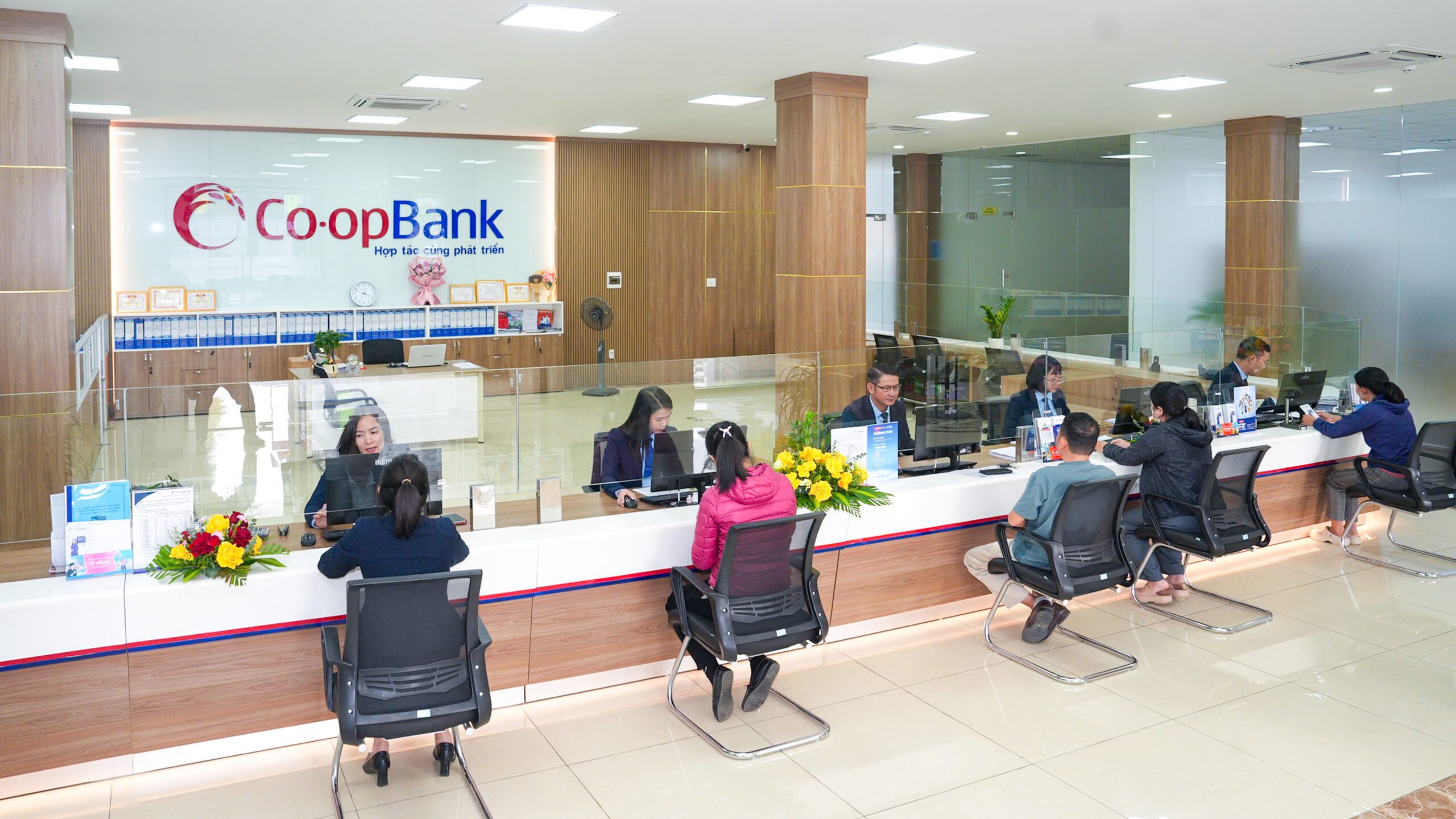
Ms. Nguyen Thi Thuy Nga – Director of Dai Trach PCF, said that to enhance its competitiveness and adapt to technological trends, the PCF has actively introduced money transfer and cashless payment services. Internal fund transfers and payments through deposit accounts are now processed quickly and securely, gradually changing members’ cash usage habits. In particular, cooperation with Co-opBank Quang Binh Branch in introducing modern banking products and services has enabled Dai Trach PCF to expand its range of financial services and bring modern banking services closer to people in local communities.
At Quang Tho PCF in Quang Tri province, digital transformation is being pursued alongside efforts to ensure information security. The PCF has established internal procedures and clearly assigned responsibilities to each unit. Its information systems are classified into three security levels, while hardware and software assets are inventoried and assigned to designated personnel for management. Primary and backup servers are maintained separately, while multi-factor authentication is applied to electronic transactions and data is backed up automatically.
Beyond these two PCFs, many others across the region are also making greater use of technology in management, loan monitoring and member services. Features such as SMS transaction notifications, repayment reminders, and access to outstanding loan balances and transaction histories enable members to manage their loans more proactively, while helping PCFs improve management efficiency and mitigate risks.
Overcoming Bottlenecks on the Digital Transformation Journey
Despite the positive progress made, the digital transformation journey of PCFs continues to face a number of challenges. Their relatively small scale, limited financial resources and shortage of dedicated IT personnel mean that their capacity to invest in modern infrastructure remains uneven.
The costs of investing in equipment, infrastructure, software, staff training and Core Banking systems pose a significant challenge for PCFs operating within a limited geographical area. At the same time, requirements for data security, information protection and operational standards are becoming increasingly stringent.
Another challenge stems from the characteristics of PCF members. Most PCF members live in rural areas, where access to and familiarity with technology vary considerably. As a result, digital services cannot immediately and completely replace traditional transactions. PCFs therefore need to modernize their operations while continuing to provide appropriate service channels for members who are not yet familiar with digital technologies.
Some PCFs have yet to develop a clear digital transformation roadmap, with implementation remaining fragmented and lacking connectivity. Without an appropriate strategy, digitalization risks being confined to isolated processes, limiting its ability to deliver sustainable benefits over the long term.
Against this backdrop, SBV Regional Branch 8 has identified digital transformation as one of the key areas that should continue to be promoted in order to build a safe and efficient PCF Network. Accordingly, PCFs are encouraged to modernize their IT infrastructure while ensuring information security and data protection, and to coordinate with Co-opBank in expanding digital banking services tailored to the needs of their members.

At the same time, SBV Regional Branch 8 continues to strengthen the use of technology and data in off-site supervision to facilitate early risk warnings, while enhancing the operation of reporting and supervisory systems in line with new standards. Coordination between SBV Regional Branch 8 and Co-opBank continues to be strengthened, with support from local Party committees and authorities.
In the long term, the development of shared technology platforms, together with technical support and workforce training, will be particularly important, especially for smaller PCFs. Rather than each PCF investing independently in costly technology systems, greater cooperation and infrastructure sharing can help reduce costs, standardize operations and enhance overall safety.
With 126 PCFs currently operating across Nghe An, Ha Tinh and Quang Tri provinces, digital transformation cannot be achieved uniformly overnight. Nevertheless, from cashless payments and loan management to data standardization and stronger information security, tangible positive changes are gradually taking shape.
According to The Banking Times