Leveraging the advantages of its close links with the People’s Credit Fund (PCF) Network, the An Giang and Kien Giang Branches of the Co-operative Bank of Vietnam (Co-opBank) are bringing credit closer to local residents and cooperatives, helping promote greener agriculture, increase product value, and improve livelihoods.
Growing in Step with Development
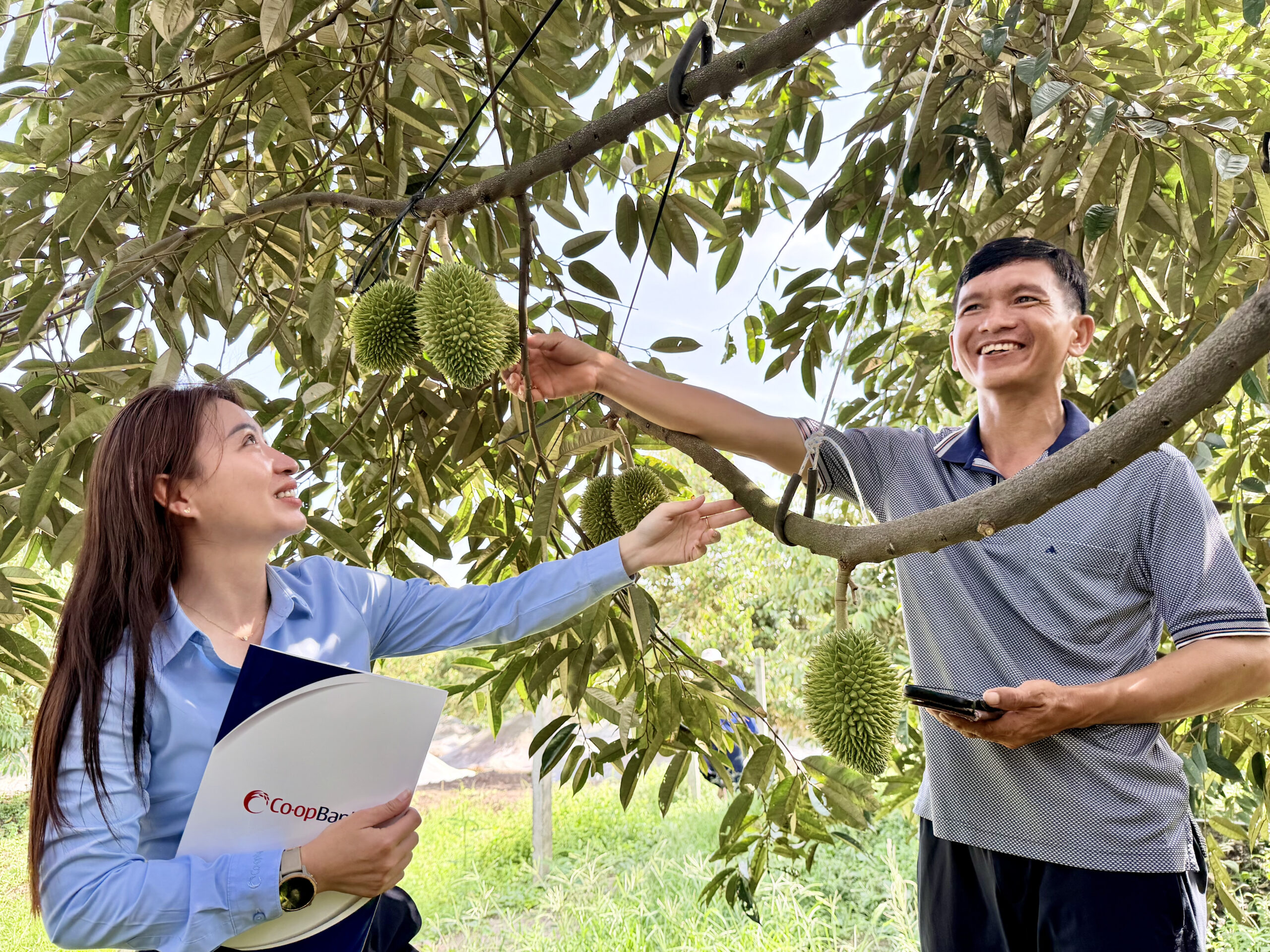
Today, a visit to My Binh Commune, An Giang Province, reveals a changing landscape, where the traditional rice-growing character of the region is taking on new dimensions. Areas devoted to vegetables, other crops, and fruit trees are expanding. Notably, on land where durian trees once struggled to take root, thriving off-season durian orchards can now be found, laden with fruit. By embracing new approaches and changing traditional farming practices, local farmers have applied scientific and technical advances, improved soil conditions, and adjusted cultivation methods to help durian trees adapt and deliver higher yields and greater economic returns. These orchards are therefore more than just a story of introducing a new crop; they also demonstrate farmers’ adaptability and innovation in responding to the demands of agricultural transformation.
Mr. Tran Chinh – Director of Phuoc Loc Thanh Agricultural Production, Trading and Services Cooperative, said that about ten years ago, he was among the pioneers who switched from rice cultivation to durian farming. The economic benefits achieved by these early adopters encouraged other local farmers to follow suit. Today, the commune has identified durian as one of its key crops and designated Binh Phuoc and Binh Thanh hamlets as cultivation areas.
However, expanding production has not been easy for households with limited accumulated capital. “I also approached several credit institutions, but found it very difficult to obtain loans,” Mr. Tran Chinh shared.
A new opportunity emerged in 2024, when the An Giang Provincial Cooperative Alliance held a meeting to implement the cooperation arrangements agreed upon with its partners. At the meeting, Co-opBank An Giang Branch introduced a preferential lending program to support the production and business activities of cooperatives and their members.
According to Mr. Dang Hoang Ngo – Director of Co-opBank An Giang Branch, many local farmers were delighted at the time to learn that Co-opBank could provide funding at suitable interest rates to support their production investments.
For Mr. Tran Van Phuong, a member of Phuoc Loc Thanh Cooperative, the funding arrived just as his durian trees were beginning to bear fruit. “Two years ago, when my trees entered their first fruiting season, I had run out of money. The loan from Co-opBank enabled me to promptly purchase fertilizers and crop protection products to support fruit development. I was then able to expand my cultivation area to 20,000 square meters,” he said.
According to Mr. Tran Chinh – Director of Phuoc Loc Thanh Agricultural Production, Trading and Services Cooperative, rice cultivation previously generated an annual profit of only around VND 2–3 million per 1,000 square meters at best, whereas durian farming offers much higher returns. At one point, off-season durians fetched VND 55,000–57,000 per kilogram. With an output of approximately three tonnes, his family earned a profit of around VND 50 million after deducting costs.
Against the backdrop of durian prices falling considerably from their previous levels, access to financing at suitable interest rates has become even more important for growers. “Co-opBank’s funding helps farmers maintain more stable profits and gives them greater confidence to invest,” Mr. Tran Chinh said.
To date, Co-opBank An Giang Branch has provided loans totaling VND 5 billion to 12 cooperative members, with a maximum credit limit of VND 3 billion per member. The cooperative’s Ri6 durian cultivation area has expanded to approximately 30–35 hectares, generating an average profit of VND 100–150 million per hectare.
Beyond supporting new production models, Co-opBank’s funding is also helping An Giang Province implement the Scheme on the Sustainable Development of One Million Hectares of High-Quality, Low-Emission Specialized Rice Cultivation Areas Linked to Green Growth in the Mekong Delta through 2030.
At Tan Thuan Agricultural Services Cooperative in My Thuan Commune, Mr. Nguyen Thanh Tuan – the Cooperative’s Director, said that since 2023, Co-opBank Kien Giang Branch has consistently supported the Cooperative by providing timely access to the funding needed for its production and business activities. Its annual loan disbursements have increased steadily, from VND 2 billion in 2023 to VND 2.2 billion in 2024, VND 2.9 billion in 2025, and VND 3.4 billion in 2026.
Initially, the Cooperative mainly borrowed funds to purchase agricultural inputs. It has gradually shifted towards high-quality, low-emission rice production. Selected to participate in the implementation of this model in An Giang province, Tan Thuan Cooperative has progressively moved away from traditional farming practices. According to Mr. Nguyen Thanh Tuan, the new model has helped reduce input costs by approximately 30%, achieve yields of around 8–10 tonnes per hectare, and secure higher purchase prices than conventional rice.
Tan Thuan Cooperative now has 75 members and approximately 500 hectares under high-quality, low-emission rice cultivation. It provides members with guidance on farming practices, supplies agricultural inputs, purchases their harvests, and guarantees market outlets for their produce. The Cooperative is also gradually tapping into the value of carbon credits. Members whose rice meets the required standards receive an additional VND 500 per kilogram from the Cooperative. These tangible benefits – including lower production costs, access to technical guidance, stable market outlets, and additional income from quality produce and carbon credits – have strengthened farmers’ confidence in the cooperative model. They increasingly recognize that joining a cooperative is not simply about working together in production, but also about gaining practical economic benefits.
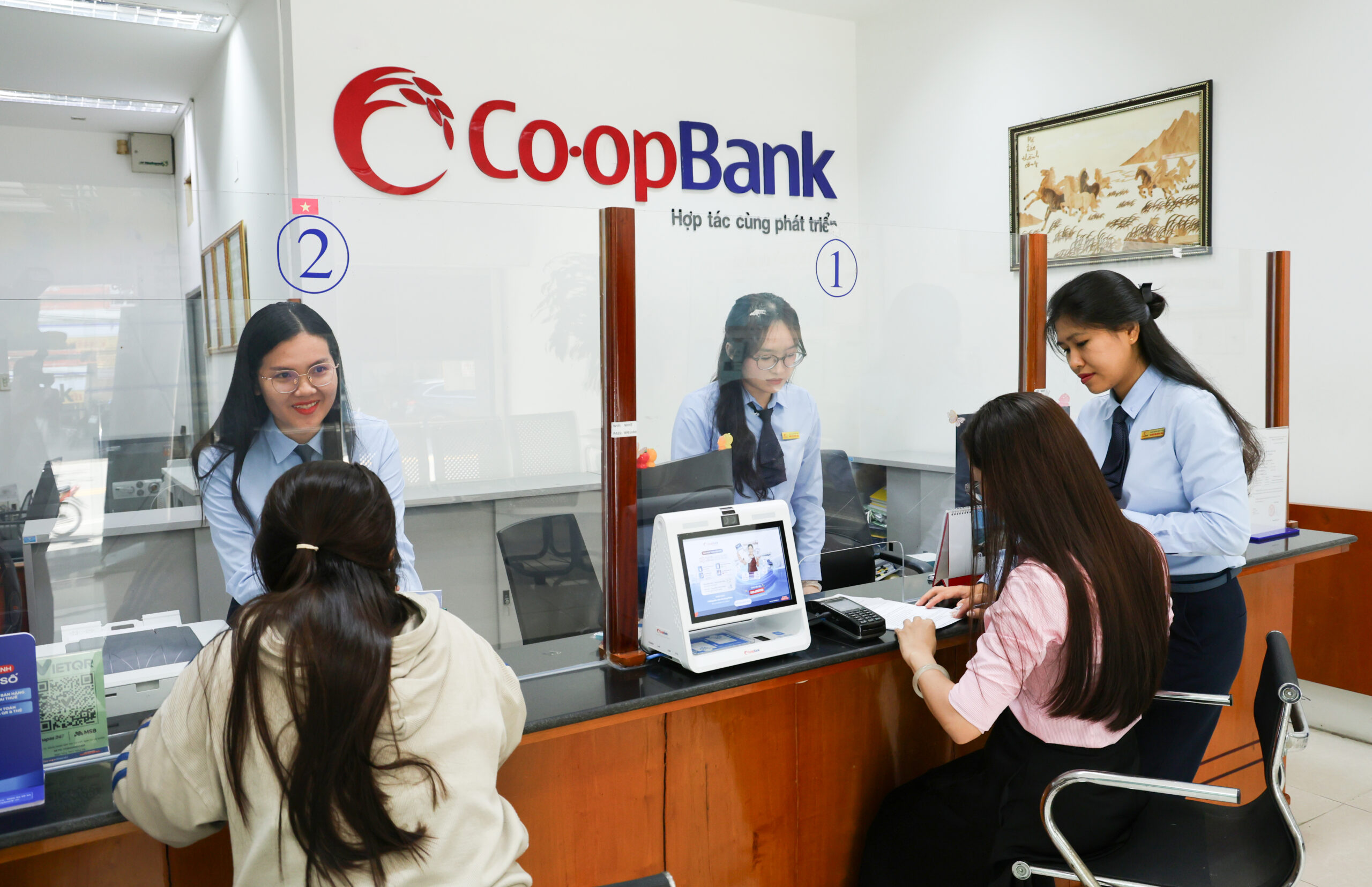
Building on these positive results, cooperative members’ demand for investment to expand production has continued to grow. Many households need additional funding to expand their cultivation areas, purchase agricultural inputs, mechanize farming operations, and improve production quality. In response, Tan Thuan Cooperative has taken the initiative to act as a focal point, working with Co-opBank Kien Giang Branch under a cooperation agreement to refer members who need financing and meet the eligibility requirements to access bank loans. Each loan is assessed based on the member’s production plan, repayment capacity, and collateral.
In this way, Co-opBank’s funding not only supports the Cooperative but also reaches farmers directly, providing members with additional resources to invest in production. As production expands, the Cooperative can also develop its raw material areas, increase its capacity to purchase and secure market outlets for members’ produce, and expand its operations.
By 2030, Tan Thuan Cooperative aims to expand its high-quality, low-emission rice cultivation area to 10,000 hectares, targeting demanding markets such as the EU and Japan. To achieve this goal, the Cooperative plans to further strengthen its links with members, expand its raw material areas, and introduce and support members in accessing Co-opBank financing to scale up production. This approach is gradually establishing a Bank–Cooperative–Member–Raw Material Area linkage model, in which the Cooperative serves as the focal point for organizing production and building connections, the Bank provides financing, and members are directly engaged in cultivation. In this way, credit flows become integrated into the value chain, creating incentives for farmers to remain active in the Cooperative and expand production towards higher quality and lower emissions.
The experiences of Phuoc Loc Thanh and Tan Thuan demonstrate that credit not only provides farmers with additional resources for production but also helps strengthen linkages, reorganize agricultural production, and integrate farm produce into value chains.
Bringing New Life to Every Patch of Land
Across An Giang Province, credit is further extended through the PCF Network, bringing financial resources closer to individual households, farmers, and local businesses.
Mr. Nguyen Hoang Anh Vu – Chairman of the Board of Directors of Chau Doc PCF, describes Co-opBank as the “pillar of support for the Network”, while PCFs serve as an “extended arm” that brings financial resources closer to local communities. Co-opBank’s strengths lie in capital intermediation and connecting resources, while PCFs have an in-depth understanding of their local areas and maintain close relationships with their members.
According to Mr. Nguyen Hoang Anh Vu, this partnership enables PCFs to meet local demand for small loans to support production, business activities, and household needs in rural areas, thereby helping broaden access to formal sources of finance.
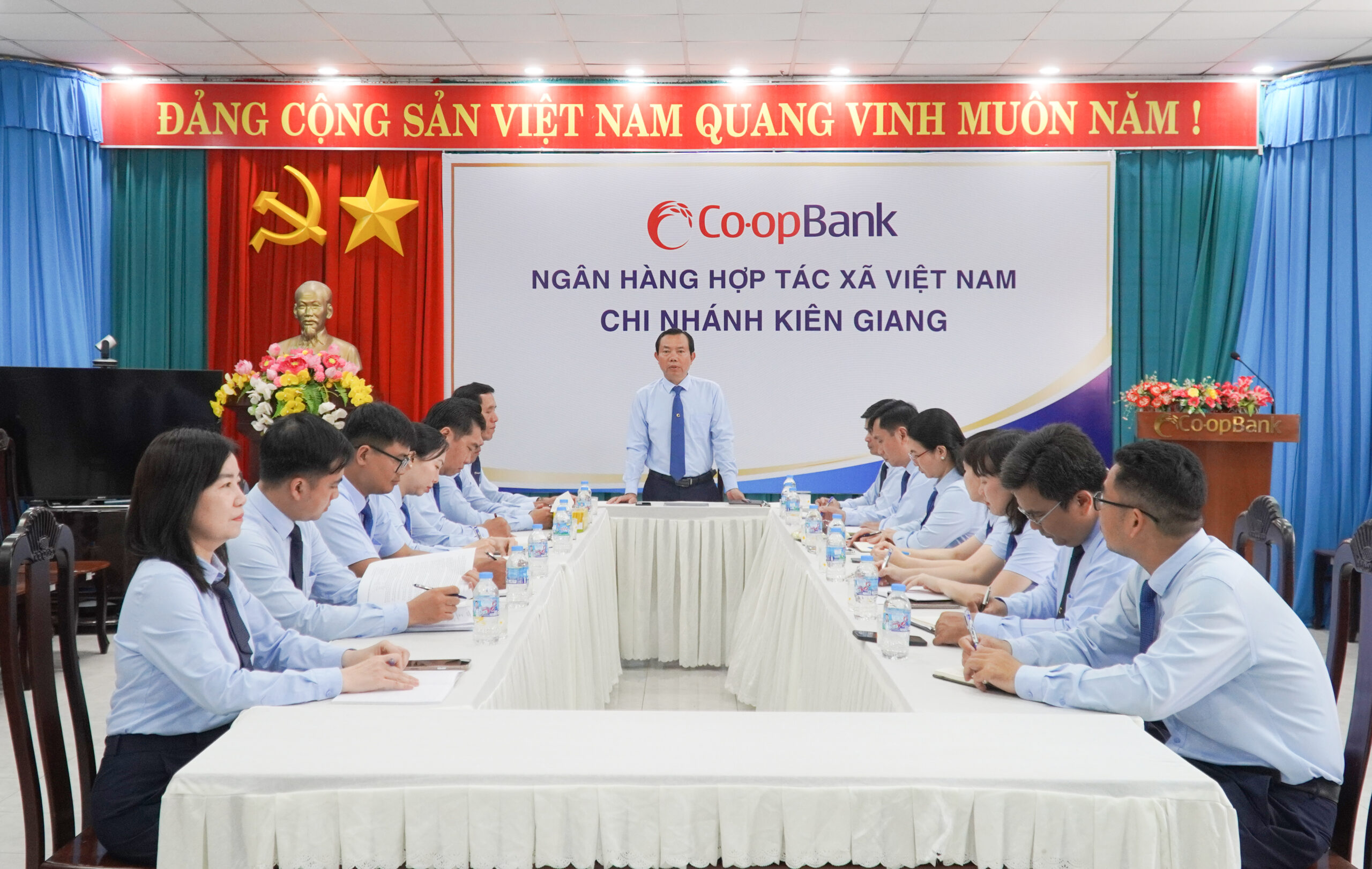
At My Duc PCF, capital intermediation from Co-opBank An Giang Branch enables the PCF to proactively manage its funding position, particularly during periods of peak borrowing demand for planting, harvesting, purchasing agricultural produce, or expanding production.
“When demand for loans exceeds locally mobilized funds, capital-intermediation funding from Co-opBank provides the PCF with additional resources, enabling it to meet members’ financing needs in a timely manner,” said Mr. Huynh Thanh Vinh – Director of My Duc PCF.
In addition to capital intermediation, My Duc PCF also works with Co-opBank An Giang Branch to provide syndicated loans to members whose financing needs exceed the PCF’s lending capacity.
A VND 26.5 billion capital-intermediating loan and a VND 20.7 billion syndicated loan from Co-opBank have helped strengthen My Duc PCF’s financial capacity, bringing its outstanding loans to VND 133.27 billion and supporting members in developing key local industries, including aquaculture.
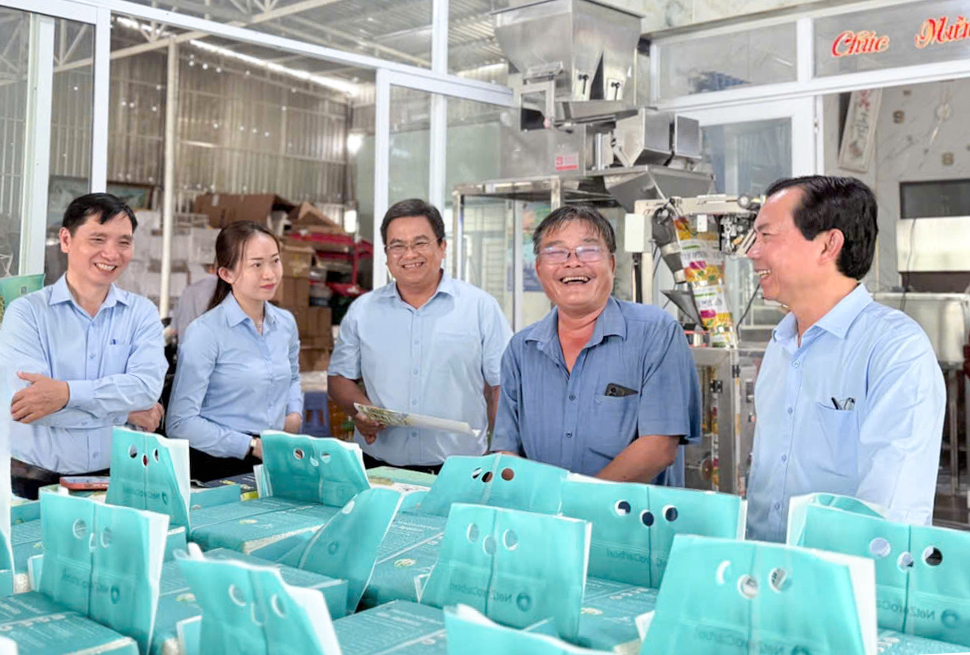
The story of Mr. Nguyen Van Em – from My Thuan Hamlet, Vinh Thanh Trung Commune, is a case in point.
Starting with virtually nothing, he gradually expanded his fish-farming operation through years of borrowing from My Duc PCF. Today, his Hai Dung fish farm covers 5,000 square meters and supplies approximately 40 tonnes of market-size fish and hundreds of thousands of fingerlings each year.
“Running a business requires careful planning, but timely support from the PCF is also essential to making it work,” Mr. Nguyen Van Em shared.
As of August 31, 2026, Co-opBank Kien Giang Branch’s outstanding loans to the PCF Network, businesses, and individual customers totaled VND 1,399 billion, up 13.37% from the end of 2025. Lending by Co-opBank An Giang Branch, together with credit extended through 42 PCFs, has continued to provide additional resources for production and business activities across the region.
At Co-opBank An Giang Branch alone, outstanding loans to cooperative members reached VND 27 billion as of August 31, 2026. From the beginning of the year through the end of August, total loan disbursements amounted to VND 29 billion, benefiting 32 borrowers from 11 cooperatives.
These figures reflect not only the scale of lending but also the role of credit in reorganizing production and helping cooperatives, PCFs, and local residents capitalize on the region’s economic strengths.
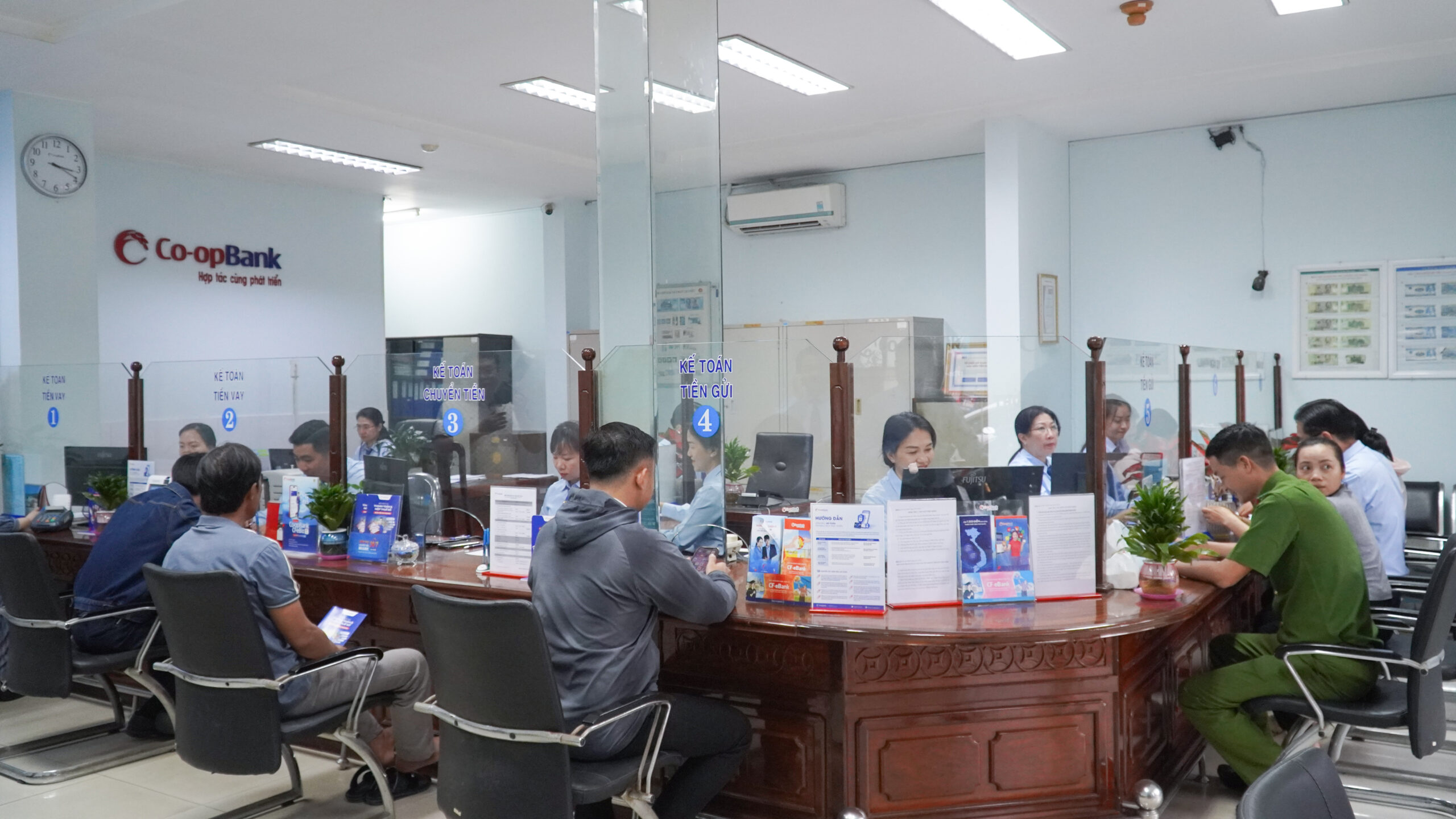
The Resolution of the An Giang Provincial Party Congress for the 2025–2030 term sets the goal of making An Giang one of the country’s more developed provinces by 2030. To achieve this, the province aims to fully harness its potential and strengths, promote a green and circular economy, and advance intensive, large-scale, technology-driven agriculture organized along value chains.
In support of this development agenda, Co-opBank An Giang Branch, Co-opBank Kien Giang Branch, and the 60 PCFs operating in the area will continue to strengthen their role in connecting funding sources, enhancing financial capacity, accelerating digital transformation, and expanding access to financial services.
Through timely access to credit, low-emission rice fields, successfully converted orchards, and households gradually building more stable livelihoods, credit flows are quietly bringing new life to every patch of land in An Giang Province. And from these everyday efforts, a new agricultural landscape is gradually taking shape – greener, more productive, and more closely integrated into value chains.
Minh Ngoc